#2: The Stanley and Danko Study from 1996
Are you a successful saver or not?
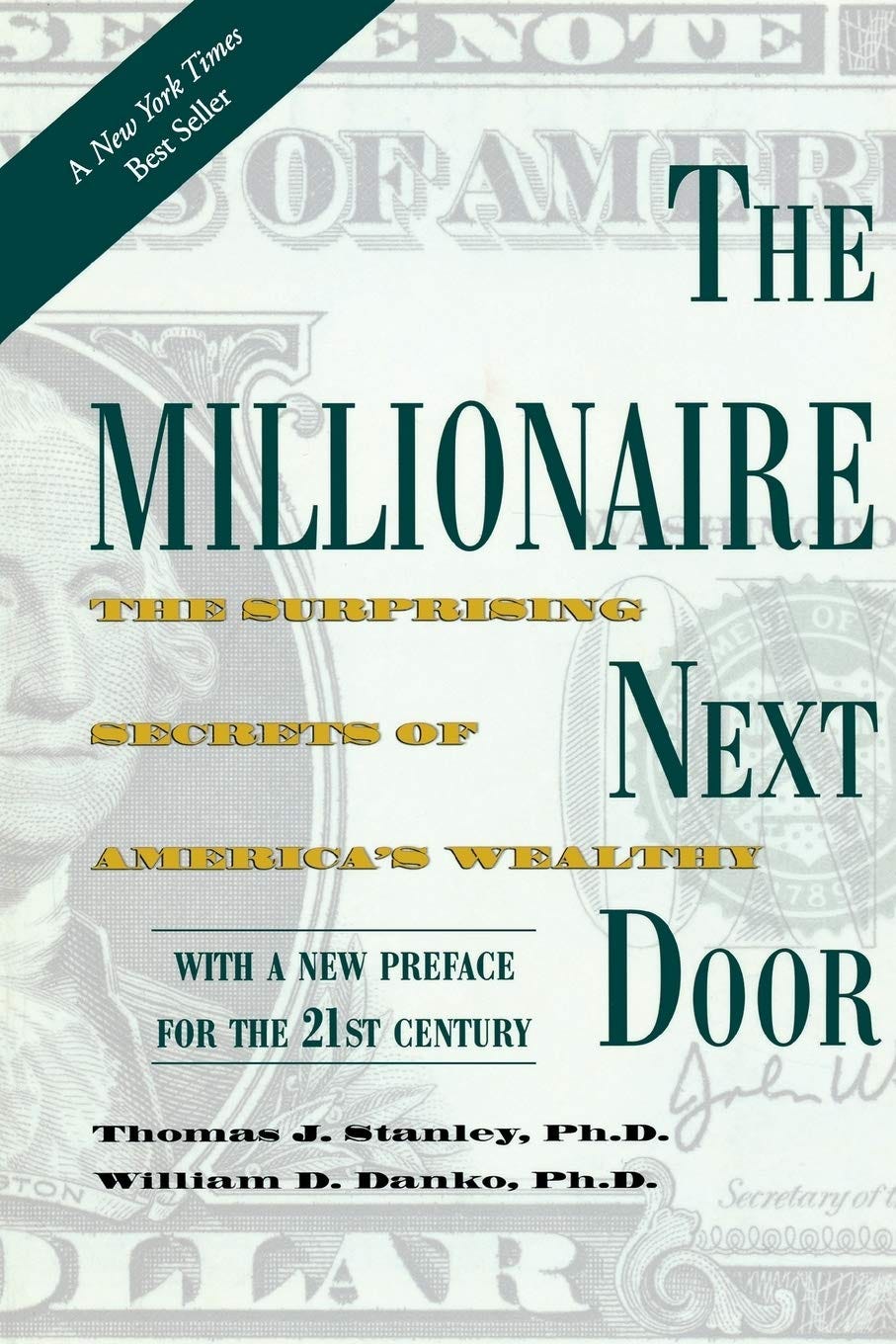
The Millionaire Next Door was published in 1996 by Thomas Stanley and William Danko. Chris Hogan’s book is inspired by this one, so it was well worth revisiting the classic. Hogan’s study reiterates the original findings by Stanley and Danko. The MND specifically focuses on understanding and contrasting the behaviors of successful savers and those who fall well short. It’s a truly a morality tale with a central driving thesis: your income does not predict your net worth.
Danko and Stanley divide the universe of savers into Prodigious Accumulators of Wealth (PAW) or Under Accumulators of Wealth (UAW). The PAWs are nowhere near the highest earners, if anything they have modest incomes. The UAWs are often high-income earners with a high-status lifestyle. They have goals of saving, but they are nowhere near what their income should suggest in terms of wealth.
Danko and Stanley suggest a simple rule to determine whether you are a UAW or a PAW. Take your current pretax income multiply it by your age and divide by 10. This is the ideal net worth adjusted for cohort by age and income. If above - rare company. If below, you have work to do.
The crux to saving efficiently is tax minimization. According to Danko and Stanley, the taxable income of PAWs is close to 7% of their net worth. Inefficient savers often maximize their taxable income relative to their net worth and never end up saving much. Correlated with this is Danko and Stanley’s takeaway that most millionaires invest wisely and do not trade actively. This may strike many of the Fintwit world as patently false and advice from era of high commissions and zero retail information flow. But ultimately, lower trading activity means lower taxes. What you keep and the government does not take is critical to long-term wealth accumulation.
Another implicit takeaway from this observation is if one plans to retire for 25 years, then your target savings goal at retirement should be 25 times your actual post-tax spending.
The final rule of thumb centers on housing. Those who save well often live in non-affluent zip codes. Interestingly, those who do live in affluent neighborhoods still only have taxable income of 6-7% of their net worth. Danko and Stanley leave this actionable advice for the aspiring wealthy: if you’re not yet wealthy but want to be someday, never purchase a home that requires a mortgage that is more than twice your household’s total annual taxable income. Millionaires generally have mortgages that are 1/3 the value of their home.
This line on the difference between successful savers and sub-par ones really hit home for me. “What you don’t know is the neighbor next door in the expensive house next to yours bought his house only after he became wealthy. You bought yours in anticipation of becoming wealthy. That day may never come.” The best savers are living according to what they know to be most certain today and relying less on predicting and hoping for the best outcome possible.
After reading both Hogan and MND, it seems that many could be successful savers if they did not get distracted by the high-income life style they seemingly want in the present. It almost seems that many over-discount the value of certain happiness today at the expense of future security. A lot of those choices even seem unconscious or not actively thought of until too late. I often reflect on many of my financial choices in my 20s. Successful savings are built upon a set of habits and specific decisions. The smarter one can become about forming and adopting these habits, the easier it will be to achieving your goals.